A history of the Konko faith, from its founding through the current day.
1600
Konjin-sama
Konjin-sama (金神), Kami of Metals, Kami of the Ominous Direction, commands both awe and fear, presiding over iron, gold, and all metals, as well as the realms of war, construction, and transformation.
People avoid him carefully, never speaking his name lightly, steering clear of certain directions, places, or times thought to be under his influence.
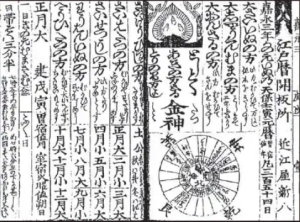
‡Diagram of Days and Directions, used to avoid the curses of Konijn-sama.
1814
Kandori Genshichi born
Kandori Genshichi (later Konko Daijin), born in Bitchu Province (now Okayama Prefecture). He will become the founder of Konkokyo.
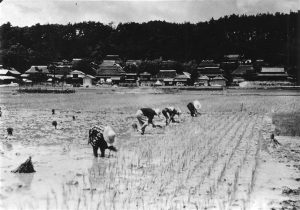
‡Photograph of farmers working a field in Okayama Prefecture.
1823
Kandori Shigeemon born
Kandori Shigeemon, the guru of Katori Konkokyo, is born in 1823, in Katori village in Bitchu. Brother to Kandori Genshichi.
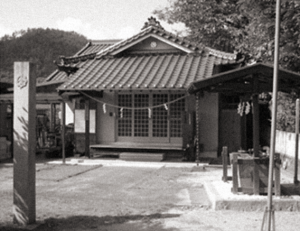
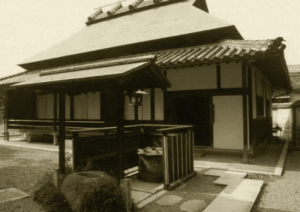
‡Photograph of Kandori Shigeemon's worship hall.
1825
Founder Adoption & Name Change
In 1825, Kandori Genshichi is adopted by Kawate Kumejiro and renamed Kawate Bunjiro.
1857
Tenchi Kane No Kami
Bunjiro and Shigeemon realize that Konjin-sama is actually Tenchi Kane No Kami when they observe his extraordinary presence and unmatched command over both natural and spiritual forces.
Bunjiro and Shigeemon discover that Konjin-sama is an aspect of the divine embodiment of Tenchi Kane No Kami, a benevolent kami, parent of the universe.
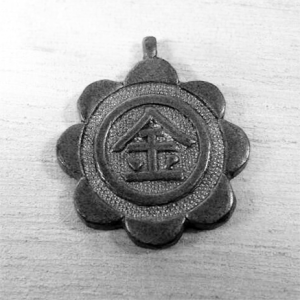
‡Photograph of mid-1800s Brass Tenchi Kane No Kami, Konjin gomon.
1857
Katori Konkokyo
Kandori Shigeemon begins his devoted practice following a proclamation of divine purpose on November 6, 1857, when he is about 34 years old. This marks the beginning of his religious practice and leadership within Katori Konkokyo.
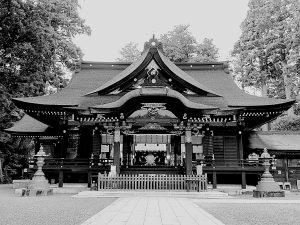
‡Photograph of Katori Jingu, which influenced early Katori Konkokyo.
1859
Divine Call of Konko
Bunjiro receives the Divine Call from Tenchi Kane no Kami, abandons farming and begins mediating for others, the founding of Konkokyo.
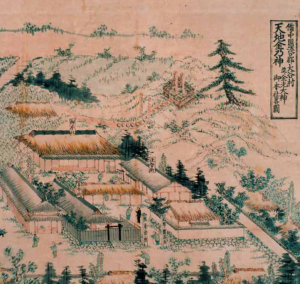
‡Painting of Otani Village, where the Founder lived.
1868
Ikigami Konko Daijin
Bunjiro is bestowed the divine title Ikigami Konko Daijin.
An Ikigami (生神) refers to a living human revered as a kami, someone who embodies divine presence and qualities while still alive.
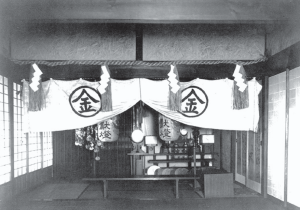
‡Recreation of the Founder's original place of worship, by one of his disciples.
1868
Meiji Restoration
After the Meiji Restoration of 1868, the new government’s religious policies restricted Konkokyo teachings because Tenchi Kane no Kami was not recognized as a formal deity in the Kojiki, which defined the only deities permitted for worship and shrine establishment during the Meiji era. The Kojiki itself is a text documenting the history and mythology of Shinto.
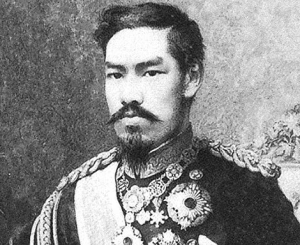
‡Portrait of the Emperor Meiji.
1873
Tenchi Kakitsuke
February: Government orders suspension of public mediation activities.
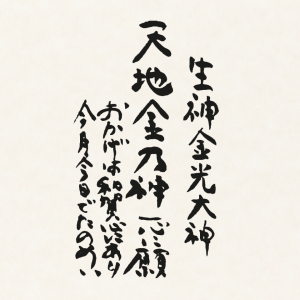
April 11: Received Tenchi Kakitsuke (Reminder of Heaven and Earth), a divine message which guides all followers of the Konko faith.
"Pray sincerely,
With all your heart.
Be one with Kami.
Kami’s blessings begin within
Hearts grateful and caring,
In harmony and joy.
Look to Kami always,
Now and forever.
On this very day, pray."
1882
Kyoha and Jinja Distinction
The state officially separated Shinto into two categories:
Shrine Shinto (Jinja Shinto): Declared non-religious and treated as state civic ritual.
Sect Shinto (Kyoha Shinto): Recognized as religious organizations upholding Shinto faith practices.
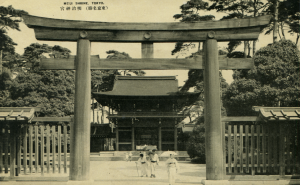
‡Photograph of Meiji Jinja, in Tokyo.
1883
Oshirase-goto Oboe-cho
The Oshirase-goto Oboe-cho, an autobiography on Konko Daijin's life, is completed.
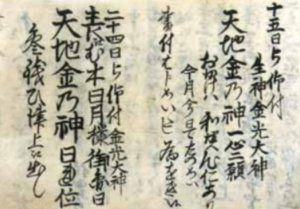
The Oshirase-goto Oboe-cho records the Founder’s personal experiences of divine blessings and revelations, written from 1857 until shortly before his death in 1883.
‡The original Oshirase-goto Oboe-cho, written by the founder.
1883
Konko Daijin Passes Away
October 10: Founder Konko Daijin passes away at age 70.
November: His son Konko Ieyoshi succeeds him as spiritual leader.
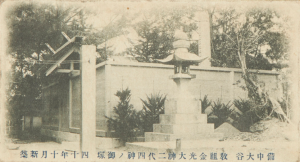
‡Photograph of the gravesite of the Founder.
1885
Konko Kyokai Established
June 2: Official establishment of Konkokyo Kyokai under the Shintō administrative system; local Konko organization begins.
Konkokyo established under the Shinto Bitchu Administrative Branch.
‡Replica of the Founder's house, the first place of Konko worship.
1913
Konkokyo Gorikai
The disciples of Konko Daijin compile the Gorikai by carefully recording his oral teachings, known as the Gorikai, as he delivers guidance to followers in daily life and ritual. Over time, these notes are organized, edited, and cross-referenced, forming a coherent collection that reflects both the practical and philosophical aspects of Konkokyo.
‡A Japanese print copy of the Gorikai.
1919
Konko Church of North America
North American mission begins, marking the start of Konko international outreach.
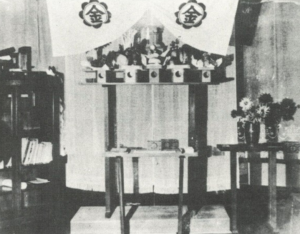
Established with the 'Konko Kyo Association' in Seattle, Washington by Bunjiro Hirayama (who later established the Konko Church of Portland).
‡Hirayama’s home altar, first Konko Kyo Association meeting place, in Seattle.
1931
Konko Church of Portland
Rev. Bunjiro Hirayama establishes the Konko Church of Portland on April 1, 1931.
1940
Konko Mission of Wahiawa
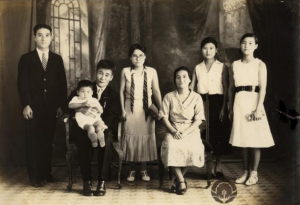
The Konko Mission is established on January 14, 1940, under the leadership of the Reverend Haruko Takahashi.
Konko Mission of Wahiawa aims to address the cultural and spiritual needs of early Japanese immigrants in Hawaii.
‡Takahashi, Haruko, and his family, in Hawaii.
1945
Dissolution of State Shinto
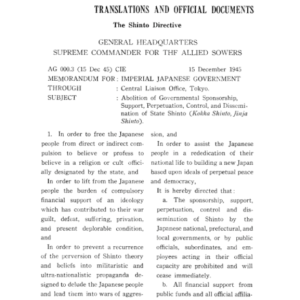
The Shinto Directive is issued to the Japanese government by Occupation authorities, dissolving State Shinto and separating Shinto from state control. State funding and support for Shinto is prohibited.
‡Scan of the Shinto Directive, issued by occupational authorities.
1959
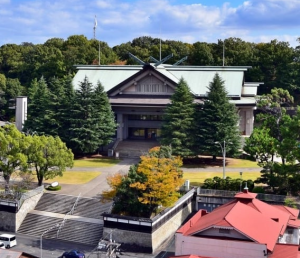
Grand Service Hall
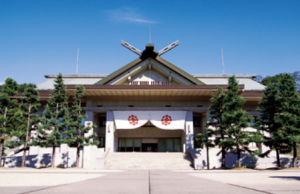
The Grand Service Hall officially opens on July 20, 1959. Covering 12,000 square meters, it has seating for 15,000 people. Grand Services are held there several times each year, drawing believers from across Japan and around the world.
‡Photograph of the Grand Service Hall.
1975
Konko Review Newsletter
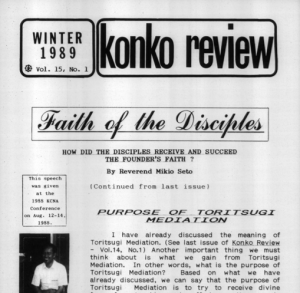
Konko Church of North America begins publication of the Konko Review newsletter, covering events throughout the international Konko community. KCNA publishes 4-6 issues per year, and the publication is still ongoing today.
‡Scan of Vol. 15, Issue 1 of the Konko Review, published in 1989.
1976
Konkokyo's 50 Years in America
The 50-year anniversary of the Konko Church of North America is celebrated, and a history of the KCNA is published as 'Konkokyo's 50 Years in America'.
1981
Konko Daijin A Biography
Konko Church of North America translates and publishes Konko Daijin, A Biography.
1983
Kyoten
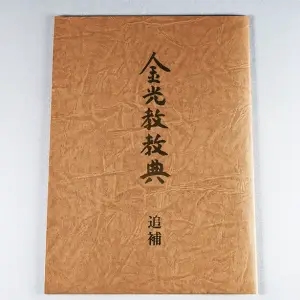
The Kyoten is published in Japan, containing three sections: Konko Daijin’s autobiography, a record of revelations received by Konko Daijin, and Konko Daijin’s teachings.
1985
Konkokyo Norito
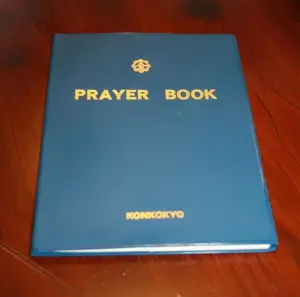
Norito prayers are composed and compiled, adapting traditional Shinto texts such as the Amatsu Norito and Oharae no Kotoba into new forms like Shinzen Haishi (Prayer to Kami) and Reizen Haishi (Prayer to Ancestral Spirits), focusing on Tenchi Kane no Kami while distinguishing its liturgy from general Shinto practices.
‡Photograph of a Konkokyo Prayer Book.
1987
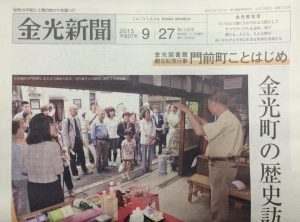
Konkokyo Shinbun Newspaper
In 1987, Konkokyo Shinbun begins publication as part of the Konkokyo Publishing Department’s efforts to strengthen communication within the Konkokyo community. Established within a long tradition of producing religious texts and instructional materials, the newspaper provides a regular forum for reporting on institutional developments, community activities, and interpretations of Konkokyo teachings.
‡Scan of the September 27th, 2015 issue of the Konkokyo Shinbun.
1989
English Prayer Book
Konkokyo Norito is translated into English and published as the Konkokyo Prayer Book.
1992
KCNA Minister's Wives Seminar
The 1st seminar for KCNA minister's wives is held in San Francisco, on January 19th. The Konko Church Cookbook, with teachings, is compiled and published by the seminar's attendees.
1993
Konkokyo International Center
Konkokyo International Center is established in 1993 to support and coordinate the international activities of Konkokyo. It works closely with activity centers in Seoul and Asuncion and with Konko churches of North America, Hawaii, and Brazil to continue propagation efforts. It also holds Konkokyo gatherings in Europe and Australia.
1994
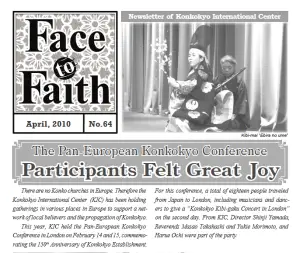
KIC Face to Faith Newsletter
Face to Faith is the KIC Konko newsletter that begins in 1994, shortly after the founding of KIC, and serves as a living voice of the organization’s mission and spiritual life. Written in a spirit of reflection and connection, the newsletter shares teachings, messages of faith, and updates that strengthen the bond between KIC and its community.
‡Scan of the 64th Issue of Face to Faith, published April of 2010.
2006
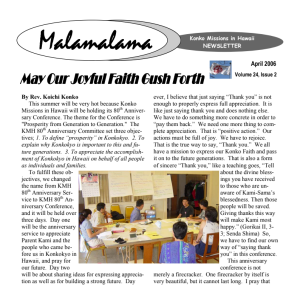
Malamalama Newsletter
The first issue of the Malamalama, the Konko Missions in Hawaii newsletter, is published. The Malamalama shares guidance and inspiration throughout the islands. The Konko Missions in Hawaii addresses the spiritual needs of the people of Hawaii by promoting the Konko faith through a deeper understanding of the life and teachings of Konko Daijin.
‡Scan of the 2nd Issue of the Malamalama, published April of 2006.
2009
Shine From Within
Shine from Within: An Introduction to the Konko Faith, is published, to serve as an introductory English Konkokyo text.
2018
Konkokyo LGBT Kai
The Konkokyo LGBT Kai receives official recognition (Kakushu Dantai) from Konkokyo Headquarters on February 15. With this recognition, Konkokyo becomes the first religion in the Kyoha Shinto Renmei (Association of Sectarian Shinto Religions) to officially recognize the LGBT community and to establish a group dedicated to supporting LGBT individuals.
‡LGBT pride variations of the Konkokyo gomon, used by Konkokyo LGBT Kai.
2025
Konko Kyouhou Newsletter
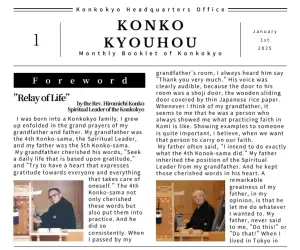
The Konko Kyouhou is the English‑language newsletter published monthly by the Konkokyo Headquarters Office beginning in 2025, serving as an official channel for administrative news, historical context, and faith guidance for the global Konkokyo community.
‡The first issue of the Konko Kyouhou, published January of 2025.